
Bacteria that causes bleeding gums and how it’s linked to increased breast cancer growth

Most people treat bleeding gums as a minor inconvenience — a sign to floss more, perhaps schedule a cleaning, and move on. But what if bleeding gums were signaling something far more serious than a localized dental problem? What if the bacteria responsible for your gum disease were actively fueling the growth of breast cancer cells?
This is not a speculative claim. It is the conclusion of peer-reviewed research — including a landmark study from one of the world’s most respected medical institutions, Johns Hopkins University — that has identified a direct and biologically plausible link between bleeding gums and breast cancer. The specific bacterium at the center of this connection, Fusobacterium nucleatum, has been found not only in gum disease tissue but inside breast cancer tumors — where it appears to accelerate tumor growth and help cancer cells evade the immune system.
At Bloom Holistic Dental, we have always believed that the mouth is a mirror of the body’s overall health. The emerging science around bleeding gums and breast cancer is one of the most compelling pieces of evidence yet that what happens in your mouth does not stay in your mouth. For women especially, understanding this connection could be genuinely life-saving.
In this post, we will explore the bacteria behind bleeding gums, the science linking gum disease and cancer risk, what the Johns Hopkins research specifically found, and how a holistic gum disease treatment NJ approach at Bloom Holistic Dental can help protect not just your smile — but your whole body.
What Causes Bleeding Gums?
Bleeding gums are the hallmark symptom of gingivitis — the earliest stage of periodontal disease. When harmful bacteria accumulate along and beneath the gumline, they form a sticky, organized film called dental plaque. If not consistently removed through brushing, flossing, and professional cleanings, this plaque hardens into tartar and the bacterial infection deepens into the gum tissue and surrounding bone.
The immune system responds to this bacterial invasion with inflammation — causing the classic signs of gum disease: redness, swelling, tenderness, and bleeding. In a healthy mouth, this inflammatory response is protective. In a mouth with chronic gum disease, it becomes a persistent, systemic problem with consequences that extend far beyond the gumline.
The Key Bacteria Behind Bleeding Gums
Several species of pathogenic oral bacteria drive periodontal disease. The most researched and clinically significant include:
Porphyromonas gingivalis — The primary driver of chronic periodontitis, linked to Alzheimer’s disease, cardiovascular disease, and systemic inflammation
Fusobacterium nucleatum — A highly invasive oral bacterium increasingly linked to colorectal cancer, adverse pregnancy outcomes, and now — critically — breast cancer growth
Treponema denticola — A spirochete found in deep periodontal pockets, associated with systemic neurological and inflammatory conditions
Tannerella forsythia — Part of the destructive red complex of periodontal pathogens, strongly associated with bone destruction and systemic disease
Of these, Fusobacterium nucleatum has emerged as the most alarming in the context of cancer — and it is the bacterium at the heart of the bleeding gums and breast cancer connection.
Fusobacterium Nucleatum: From Your Gums to Your Breast Tissue
What Is Fusobacterium Nucleatum?
Fusobacterium nucleatum is an anaerobic, gram-negative bacterium that is a normal resident of the oral cavity in small quantities. In a healthy, balanced oral microbiome, it is kept in check by beneficial bacteria and the immune system. However, in a dysbiotic mouth — one characterized by poor oral hygiene, gum disease, a high-sugar diet, or disrupted microbiome — F. nucleatum can proliferate aggressively, colonizing deep gum pockets and entering the bloodstream through inflamed, bleeding gum tissue.
Once in the bloodstream, F. nucleatum is a remarkably effective traveler. It has been detected in the colon, the placenta, and — most alarmingly — inside breast cancer tumors. Research has shown that this bacterium possesses specific molecular mechanisms that allow it to adhere to and invade human cells, evade immune detection, and manipulate cellular signaling pathways in ways that promote tumor growth and survival.
How Fusobacterium Nucleatum Promotes Cancer Growth
The mechanisms through which F. nucleatum drives cancer progression are multiple and increasingly well understood:
FadA Adhesin — F. nucleatum produces a unique surface protein called FadA adhesin that binds to E-cadherin receptors on human cells. This binding activates the Wnt/β-catenin signaling pathway — one of the most critical pathways in cancer cell proliferation, invasion, and metastasis.
Immune Evasion — F. nucleatum suppresses the activity of natural killer (NK) cells and tumor-infiltrating lymphocytes — the immune system’s primary cancer-fighting cells — effectively helping tumors hide from immune surveillance.
Inflammatory Promotion — The bacterium triggers the release of pro-inflammatory cytokines including TNF-α and IL-6, creating a chronic inflammatory microenvironment within tumor tissue that accelerates cancer cell growth and spread.
Chemotherapy Resistance — Emerging research has found that F. nucleatum within tumor tissue can activate autophagy pathways that make cancer cells resistant to chemotherapy — a finding with enormous clinical implications for treatment outcomes.
The Johns Hopkins Study: Groundbreaking Research on Oral Bacteria and Breast Cancer
What the Study Found
One of the most significant contributions to our understanding of the bleeding gums and breast cancer connection comes from researchers at Johns Hopkins University, whose work has helped establish Fusobacterium nucleatum as a clinically relevant factor in breast cancer biology.
The Johns Hopkins research identified the presence of Fusobacterium nucleatum within breast cancer tumor tissue and demonstrated that higher levels of the bacterium within tumors were associated with more aggressive cancer behavior, poorer treatment response, and worse patient outcomes. Critically, the study found that F. nucleatum was not simply a passive bystander in tumor tissue — it was actively influencing the tumor microenvironment in ways that promoted cancer progression.
The researchers found that F. nucleatum activated specific oncogenic signaling pathways within breast cancer cells — the same Wnt/β-catenin pathway identified in colorectal cancer research — driving increased cell proliferation and invasiveness. The study also identified that the bacterium’s presence was associated with a subtype of breast cancer known for particularly aggressive behavior and resistance to standard treatments.
Why This Research Matters
The Johns Hopkins findings are significant for several reasons that extend well beyond the laboratory:
They establish biological plausibility — This is not simply a statistical association. The research identifies specific molecular mechanisms through which an oral bacterium drives breast cancer growth, making the connection scientifically credible and actionable.
They connect oral hygiene to cancer prevention — If F. nucleatum reaches breast tissue via the bloodstream through bleeding gums, then controlling gum disease becomes a meaningful cancer prevention strategy — not just a dental recommendation.
They open new diagnostic possibilities — The presence of F. nucleatum in tumor tissue may eventually serve as a diagnostic or prognostic biomarker, helping clinicians identify high-risk patients or predict treatment responses.
They validate the oral-systemic health connection — The Johns Hopkins research adds powerful institutional weight to what holistic dentists have long understood: that gum disease and cancer risk are not separate conversations.
Gum Disease and Cancer Risk: A Broader Pattern
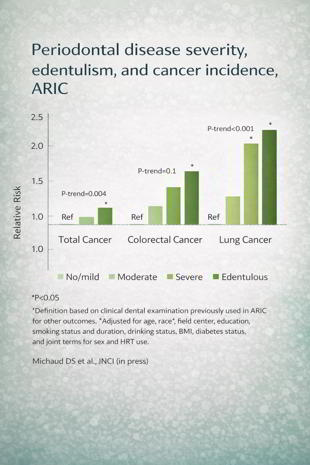
The Johns Hopkins breast cancer research does not exist in isolation. It is part of a growing body of evidence linking gum disease and cancer risk across multiple cancer types:
Colorectal Cancer — F. nucleatum is now one of the most studied bacterial drivers of colorectal cancer, found in significantly higher concentrations in colorectal tumor tissue compared to healthy colon tissue
Pancreatic Cancer — Studies have found that individuals with chronic periodontal disease have up to a 59% higher risk of developing pancreatic cancer compared to those with healthy gums
Esophageal Cancer — Periodontal pathogens including P. gingivalis and F. nucleatum have been detected in esophageal tumor tissue and associated with poorer survival outcomes
Lung Cancer — Oral bacteria have been identified in lung tumor microbiomes, with periodontal disease associated with increased lung cancer risk in multiple epidemiological studies
The pattern is consistent and alarming: chronic gum disease creates a reservoir of invasive, oncogenic bacteria that can travel throughout the body and establish themselves in vulnerable tissue — where they drive inflammation, immune evasion, and tumor growth.
The Entry Point: Why Bleeding Gums Are So Dangerous
The critical link between bleeding gums and breast cancer is the entry point that gum disease provides for F. nucleatum and other oral pathogens to access the bloodstream. Healthy gum tissue forms a tight, intact seal around each tooth that prevents bacteria from entering the circulation. But inflamed, bleeding gum tissue is a compromised barrier — one that allows bacteria to enter the bloodstream with every chew, every brush, and every swallow.
This is why the visible sign of bleeding gums is so much more than a cosmetic dental concern. It is a sign that the protective barrier between your oral microbiome and your systemic circulation has been breached — and that potentially oncogenic bacteria are gaining regular access to your body.
Holistic Gum Disease Treatment NJ: Addressing the Root Cause
Why a Holistic Approach Makes the Difference
Conventional gum disease treatment typically focuses on mechanical removal of plaque and tartar through scaling and root planing — an important first step, but one that does not address the underlying microbial imbalance, immune dysregulation, and systemic inflammation that drive chronic periodontal disease.
At Bloom Holistic Dental, our holistic gum disease treatment NJ approach goes deeper — identifying and addressing the root causes of gum disease rather than simply managing its symptoms.
Our Holistic Gum Disease Treatment Approach

Oral Microbiome Testing — We evaluate the specific bacterial composition of your oral environment to identify the presence and concentration of high-risk pathogens including F. nucleatum, P. gingivalis, and other species associated with systemic disease risk.
Ozone Therapy — Medical-grade ozone is one of the most powerful and selective antimicrobials available. It penetrates deep into infected gum pockets and destroys anaerobic pathogens — including F. nucleatum — without harming beneficial bacteria or healthy tissue. Ozone therapy is a cornerstone of our holistic gum disease treatment NJ protocol.
Laser Bacterial Reduction — Our soft tissue laser technology targets and eliminates pathogenic bacteria within periodontal pockets with exceptional precision, reducing bacterial load and promoting tissue healing simultaneously.
CBCT Imaging — Our cone-beam computed tomography allows us to detect hidden bone loss, deep infections, and abscesses that conventional X-rays miss — infections that silently maintain systemic bacterial and inflammatory burden.
Nutritional Guidance — Diet profoundly shapes the oral microbiome. We provide personalized guidance on anti-inflammatory, prebiotic-rich nutrition that starves pathogenic bacteria and nourishes beneficial oral flora.
Biocompatibility Testing — In Biocompatibility Testing , Every material used in our office is selected to minimize immune and inflammatory burden — supporting your body’s natural defenses rather than taxing them.
What Women Need to Know
Given the specific findings of the Johns Hopkins research and the broader pattern of gum disease and cancer risk, women have particularly compelling reasons to prioritize their periodontal health:
- Schedule regular holistic dental evaluations that assess the full oral microbiome — not just visible plaque and tartar
- Address bleeding gums immediately — do not wait or dismiss this symptom
- Request oral microbiome testing to identify the presence of high-risk bacterial species
- Adopt a holistic oral hygiene routine that includes tongue scraping, oil pulling, and microbiome-friendly rinses
- Discuss your periodontal health history with your oncologist or primary care physician as part of your overall cancer risk assessment
Your Gum Health Is Your Whole Body Health
The research is clear, the mechanism is understood, and the implications are profound. The connection between bleeding gums and breast cancer is not a distant or theoretical concern — it is an active biological reality rooted in the behavior of specific pathogenic oral bacteria that exploit the entry point created by diseased, bleeding gum tissue.
Understanding the link between gum disease and cancer risk transforms how we think about periodontal disease — from a localized dental problem to a systemic health priority with life-or-death stakes. The Johns Hopkins research has made this connection impossible to ignore.
At Bloom Holistic Dental, our holistic gum disease treatment NJ approach is designed to address this threat at its root — protecting not just your smile, but your long-term health and wellbeing.
Protect Your Gums. Protect Your Health. Book Your Appointment Today.
At Bloom Holistic Dental, Dr. Nicole Zimmermann and her team serve patients across Central New Jersey — with comprehensive holistic periodontal evaluations and treatments designed to protect your oral and whole-body health.
Address: 55 Willow Lane, Suite 203, Englishtown, NJ 07726
Phone: 732-792-3260
Email: bloomholisticdental@gmail.com
Hours: Mon 8–3, Tue Closed, Wed 9–4, Thu Closed, Fri 9–4; emergency by request.
Podcast: Play in new window | Download