
What Happens to Mercury Vapor During Improper Amalgam Removal
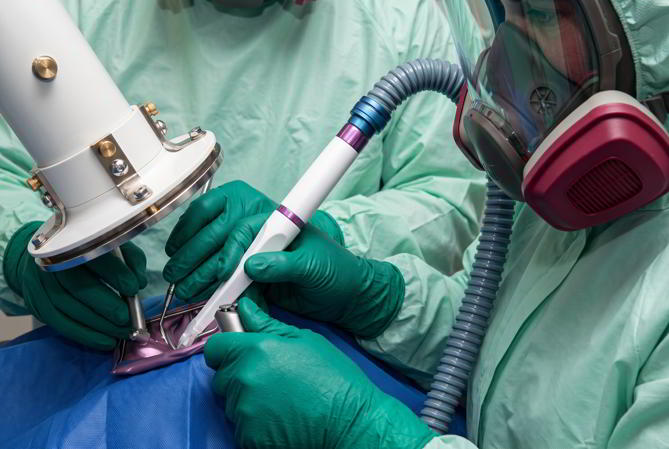
Medically reviewed by Dr. Nicole Zimmermann, DDS — IAOMT-accredited biological dentist, Bloom Holistic Dental, Englishtown, NJ.
Dental amalgam — the classic “silver filling” — is roughly 50% elemental mercury by weight. While it sits still in a tooth, exposure to the patient is generally minimal, and mainstream organizations including the FDA, ADA, and WHO consider amalgam safe for the general population, though the FDA’s advisory flags certain higher-risk groups for whom alternatives may be preferable. The real risk window opens the moment a high-speed drill touches that filling during removal. This article focuses specifically on mercury vapor during amalgam removal — what happens to it when proper protocol isn’t followed, and why the removal process itself matters more than the material sitting quietly in place.
This distinction gets lost in much of the online debate about amalgam safety, which tends to focus on whether the material itself is dangerous rather than on the much more clearly documented risk of the removal procedure. Regardless of where a patient lands on the broader amalgam debate, the occupational and clinical research on removal technique is unambiguous: how a filling is taken out matters enormously, and it’s a variable entirely within a dental office’s control. Practicing biological protocols like SMART amalgam removal ensures that patient and staff safety remains the central priority.
How Mercury Vapor Enters the Body
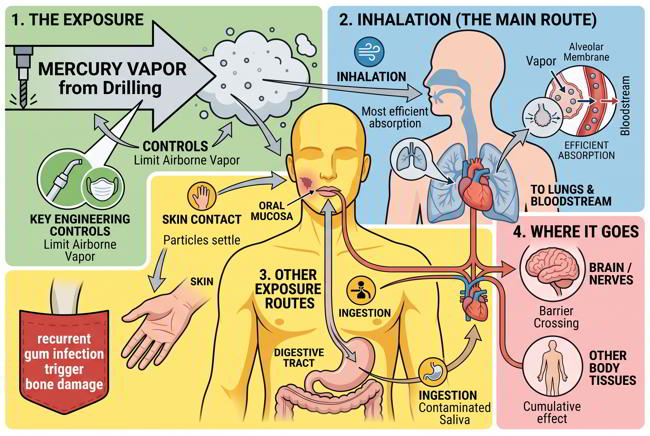
Mercury vapor released during drilling can enter the body through three main routes:
- Inhalation: Inhaled into the lungs, where elemental mercury vapor is efficiently absorbed across alveolar membranes directly into the bloodstream.
- Mucous Membrane & Skin Absorption: Direct contact from settled micro-particulate on the skin or oral mucosa.
- Ingestion: Swallowing particulate fragments or contaminated saliva during drilling.
Inhalation is widely considered the most significant route because the lungs absorb elemental mercury vapor far more efficiently than the digestive tract absorbs solid particles. This is precisely why high-volume suction and rubber dam isolation — the two engineering controls most directly aimed at limiting airborne exposure — form the backbone of a safe biological protocol.
Once absorbed, elemental mercury distributes through the bloodstream and can cross into various tissues, including the central nervous system. This is why occupational health researchers have paid close attention to dental workers who face repeated, cumulative exposure over a career, not just patients facing a single removal appointment. The dose and frequency of exposure both influence risk, which is why a single, properly protected removal carries a vastly different risk profile than years of unprotected occupational exposure.
Who Faces the Highest Risk From an Improper Removal
While anyone can be exposed to excess mercury vapor during a poorly protected removal, certain groups warrant extra caution according to the FDA’s guidance:
- Pregnant women and women planning to become pregnant
- Nursing mothers and infants
- Children under the age of six
- Individuals with pre-existing neurological conditions or kidney impairment
- People with heightened immunological reactivity to heavy metals
For these patients in particular, confirming that a full safety protocol will be utilized is a critical risk-reduction decision that aligns with the core principles of holistic dentistry.
Why Removal Is the Riskiest Moment for Mercury Exposure
Drilling into amalgam generates friction-based heat that vaporizes elemental mercury directly, while creating microscopic aerosolized particles that continue releasing mercury vapor long after they land on surfaces, skin, or operatory air. Occupational safety studies demonstrate that cutting amalgam without barrier isolation or continuous water irrigation causes sharp spikes in localized vapor concentrations.
What Happens to Mercury Vapor During Amalgam Removal
Without Water Spray and High-Volume Suction
A controlled occupational exposure study indexed in the National Library of Medicine (PubMed) evaluated mercury vapor levels during dental amalgam restorations and removals. The findings confirmed that removing amalgam dry (without water cooling) or without high-volume suction results in localized mercury vapor spikes that can exceed occupational threshold limit values (TLV). Conversely, applying continuous copious water spray alongside high-volume evacuation reliably suppresses airborne vapor to safe baselines.
Airborne Particulate That Keeps Releasing Vapor
Amalgam dust that settles on patient bibs, clinical attire, or operatory surfaces doesn’t stop being an exposure source once the drill stops. Because these micro-particles reach room and body temperature, they continue off-gassing elemental mercury vapor over subsequent hours. Safe protocols require clinical teams to use impermeable skin/clothing barriers and dispose of protective gear immediately after the procedure.
Swallowed or Inhaled Fragments
Without rubber dam isolation to seal off the airway and oral cavity, small amalgam fragments and contaminated slurry can easily be aspirated or swallowed, introducing gastrointestinal and respiratory exposure pathways on top of direct vapor inhalation.
Why the SMART Protocol Exists
The Safe Mercury Amalgam Removal Technique (SMART) was developed by the International Academy of Oral Medicine and Toxicology (IAOMT) to intercept each of these exposure routes. A standard SMART removal includes:
- A non-latex rubber dam isolating the operative tooth from the oral cavity.
- Copious water irrigation paired with specialized high-volume suction tips.
- Supplemental oxygen or clean external air delivered via nasal cannula to the patient.
- Industrial HEPA and mercury-vapor air filtration operating in the operatory.
- “Chunking” the amalgam — cutting it into large blocks rather than pulverizing it into fine aerosol dust.
- Full protective barrier drapes for both the patient and dental staff.
What a Fully Protected Removal Looks Like, Step by Step
At Bloom Holistic Dental, every removal follows a rigorous sequence:
- Dedicated mercury-vapor air scrubbers are activated prior to your arrival.
- Protective body coverings and a sealed rubber dam are positioned over the tooth.
- You receive clean supplemental air to breathe throughout the procedure.
- Dr. Zimmermann sections the filling under heavy water cooling and high-volume evacuation.
- The operative field is thoroughly copiously rinsed before the dam is removed.
- The tooth is restored using non-toxic, biocompatible fillings and restorations.
How This Compares to Everyday Amalgam Wear
Intact amalgam fillings release trace amounts of mercury vapor during routine daily activities like chewing, brushing, and drinking hot liquids. However, the acute exposure generated during an improperly performed, unprotected removal can exceed years of normal daily wear within a matter of minutes. This stark difference is why strict engineering protocols during the removal window are essential.

What This Means If You’re Considering Amalgam Removal
Not every intact amalgam filling requires removal. The decision should be made individually, weighing your personal medical history, structural tooth integrity, and restorative goals. If you choose to replace old fillings, we recommend pairing the procedure with tailored nutritional and detoxification support — detailed in our guide on Post-SMART Detox Support Strategies That Complement Dental Care.
Frequently Asked Questions
Is it dangerous to leave old amalgam fillings in place?
Intact, functioning amalgam fillings generally present low daily exposure. Removal is usually indicated when a filling shows recurrent decay, structural breakdown, fracture lines, or when requested for personal health and biocompatibility reasons.
How long does mercury vapor exposure last after an improper removal?
Settled amalgam dust and particulate can continue off-gassing mercury vapor for several hours if not contained and evacuated immediately using proper filtration and barrier disposals.
Can I request the SMART protocol at any dental office?
Most traditional dental offices do not possess the specialized high-volume mercury vacuums, source filtration systems, or supplemental air setups required for full SMART compliance. Seeking an IAOMT-accredited biological dentist ensures complete adherence to these safety standards.
What happens to amalgam fragments after they are removed?
A biological dental practice utilizes specialized amalgam separators to filter and capture metal waste, preventing mercury from entering municipal water systems or the surrounding environment.
Next Step
If you are planning to have silver fillings replaced, protect yourself and your health by ensuring the procedure is performed under strict safety standards. Schedule a SMART consultation with Dr. Zimmermann at Bloom Holistic Dental in Englishtown, NJ, to discuss your personalized treatment plan.
Address: 55 Willow Lane, Suite 203, Englishtown, NJ 07726
Phone: 732-792-3260
Email: bloomholisticdental@gmail.com
Hours: Mon 8–3, Tue Closed, Wed 9–4, Thu Closed, Fri 9–4; emergency by request.
Podcast: Play in new window | Download