Ozone as an Adjunct for Periodontal Maintenance: Keeping Gum Disease From Coming Back
Medically reviewed by Dr. Nicole Zimmermann, DDS — IAOMT-accredited biological dentist, Bloom Holistic Dental, Englishtown, NJ.
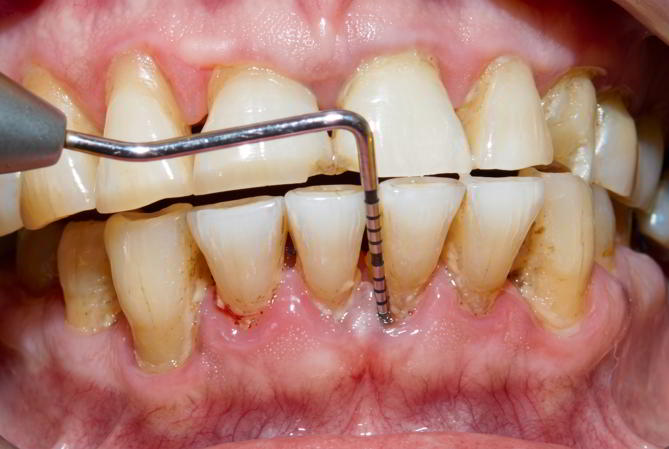
Active periodontal treatment — scaling, root planing, and targeted pocket disinfection — gets a lot of attention. But the real long-term challenge in gum disease is what happens after that initial round of therapy ends. Bacterial biofilm begins reorganizing within days of a cleaning, and pockets that remain 4 millimeters or deeper stay at meaningfully higher risk of relapse. That is why ozone is increasingly utilized not just as a one-time intervention, but as an ongoing adjunct woven into routine periodontal maintenance visits.
Patients often assume that once active treatment is finished and pocket depths have improved, the work is done. In reality, periodontal disease behaves like a chronic condition requiring long-term control rather than an acute, one-time infection. The goal of maintenance is not just cleaning teeth; it is actively managing a recurring bacterial and inflammatory process over the long term — a fundamental principle of holistic biological dentistry.
The Cost of Skipping or Delaying Maintenance Visits
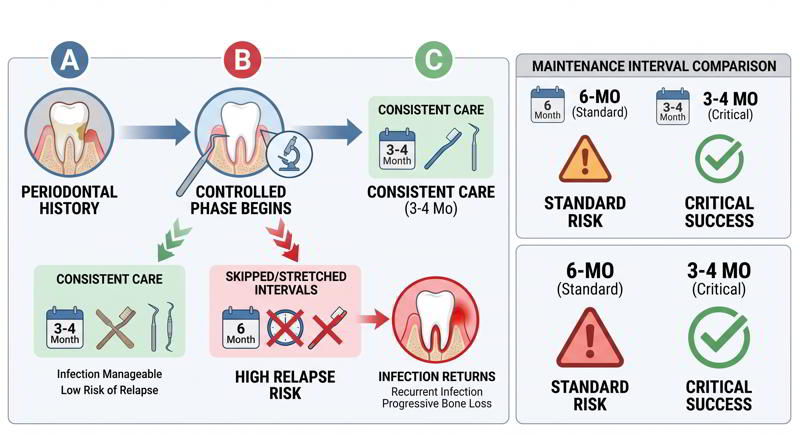
It is common for patients to feel fine and assume they can push a maintenance visit back a month or two without consequence. Because early periodontal relapse is often painless, measurable bone loss may already occur before visible symptoms like bleeding, swelling, or sensitivity reappear. Consistent three- to four-month intervals exist specifically because that is roughly how long controlled biofilm takes to reorganize into a complex, pathogen-dense colony in a previously treated pocket — which is also the exact window where a brief ozone application does the most good.
Why Periodontal Disease Is a Maintenance Problem, Not a One-Time Fix
Once you have been diagnosed with periodontal disease, your risk of relapse does not disappear after treatment; it simply becomes manageable with consistent care. Patients with a periodontal history are typically recommended to attend maintenance cleanings every three to four months rather than the standard six-month interval. Skipping or stretching out these maintenance intervals remains one of the most common reasons gum infections return.
How Ozone Fits Into a Periodontal Maintenance Protocol
Using ozone dentistry as an adjunct for periodontal maintenance means applying the same oxidative, antimicrobial principles used during active treatment, but on a smaller, targeted scale during each recall visit rather than a full-mouth protocol.
Targeted Pocket Irrigation at Recall Visits
During a maintenance cleaning, any pocket measuring 4 millimeters or deeper — the sites most likely to harbor residual anaerobic bacteria — can be irrigated with ozonated water or treated briefly with ozone gas following routine periodontal charting. This keeps the intervention proportional: healthy sites are not over-treated, while at-risk sites receive targeted antimicrobial protection.
Supporting Home Care Between Visits
Some patients are also recommended ozonated oils for targeted application at home between professional visits, particularly around sites with a history of recurring inflammation. This is designed to complement, not replace, daily brushing and interdental cleaning.
What the Evidence Says About Ozone for Long-Term Periodontal Stability
A comprehensive systematic review and meta-analysis indexed in the National Library of Medicine (PubMed) evaluated the clinical efficacy of adjunctive ozone therapy in non-surgical periodontal treatment. The pooled evidence revealed statistically significant reductions in probing pocket depth (PPD) and clinical attachment level (CAL) gains when ozone was combined with mechanical scaling compared to debridement alone, confirming that ozone provides a meaningful clinical benefit in controlling subgingival infection.
Furthermore, clinical trials evaluating ozone in medically compromised populations (such as patients with type 2 diabetes and periodontitis) have demonstrated favorable modulation of local oxidative stress markers alongside periodontal parameter improvements. Because periodontal inflammation and systemic oxidative stress are closely linked, targeted non-pharmaceutical approaches offer unique systemic advantages for maintaining long-term gum stability.
Who Benefits Most From Ozone-Supported Maintenance
Ozone-supported maintenance is particularly beneficial for:
- Patients with a documented history of chronic or aggressive periodontitis.
- Individuals managing diabetes or autoimmune conditions associated with elevated systemic inflammation.
- Patients seeking to minimize long-term reliance on chlorhexidine rinses (which can cause teeth staining and oral dysbiosis).
- Individuals with dental implants, where healthy soft tissue is critical to prevent peri-implantitis and maintain long-term stability.
What a Maintenance Visit With Ozone Looks Like at Bloom Holistic Dental
Every maintenance visit begins with comprehensive periodontal charting to track pocket depth changes over time, identifying which sites remain stable and which require focused attention. Ozone application is used selectively based on that charting and on insights from our oral microbiome evaluations and biocompatibility assessments.
We monitor multi-visit trends closely. A pocket that remains stable at 4 millimeters across several recalls indicates clinical stability, whereas a pocket that increases from 3 to 5 millimeters signals active breakdown that requires prompt, targeted intervention.
Common Reasons Periodontal Disease Comes Back
Even with good home habits, several factors can accelerate periodontal relapse:
- Missed Appointments: Allowing biofilm to mature past the 90-day threshold without professional disruption.
- Systemic Stress & Poor Sleep: Chronic stress elevates systemic cortisol and inflammatory cytokines, weakening gingival immune defenses.
- Medication-Induced Dry Mouth: Reduced saliva flow diminishes the mouth’s natural buffering capacity against pathogenic bacteria.
- Blood Sugar Fluctuations: Elevated glucose impairs microvascular circulation in the periodontal ligament.
Tracking Progress and Setting Realistic Expectations
Ozone therapy is a powerful biological tool, but it is not a standalone substitute for foundational oral hygiene. It does not replace mechanical debridement, flossing, or adherence to recall schedules. Instead, ozone acts as an advanced biological adjunct that tips the balance toward tissue healing and pathogen suppression at the sites most susceptible to relapse.
Coordinating Maintenance With Your Broader Health Picture
Periodontal maintenance visits serve as an ongoing checkpoint for your overall wellness. Systemic changes — such as new medical diagnoses, prescription changes, or hormonal shifts — directly influence gum health. Our biological approach ensures that your dental care remains aligned with your whole-body health at every stage.
Frequently Asked Questions
How often should ozone be used during periodontal maintenance?
Ozone is typically incorporated at each three- to four-month maintenance visit for patients with residual periodontal pockets or areas showing recurring inflammation.
Does ozone maintenance reduce the need for chlorhexidine rinses?
Yes. Ozone provides potent localized antimicrobial action without the side effects of prolonged chlorhexidine use, such as tooth staining, calculus buildup, and alteration of the beneficial oral microbiome.
Is a periodontal maintenance visit different from a regular dental cleaning?
Yes. A routine cleaning (prophylaxis) focuses on preventive care for healthy gums, whereas periodontal maintenance involves deeper subgingival debridement, pocket measurement, and targeted antimicrobial therapies for patients with past gum disease.
Can I switch to ozone-supported maintenance if I was treated elsewhere?
Yes. We welcome patients transferring their care. Bringing your previous periodontal charting and recent radiographs allows us to design an individualized maintenance plan immediately.
Next Step
If you have completed periodontal treatment and want to protect your results long term, consider integrating ozone therapy into your maintenance regimen. Schedule your periodontal recall appointment at Bloom Holistic Dental in Englishtown, NJ, to support lasting oral-systemic health.
Address: 55 Willow Lane, Suite 203, Englishtown, NJ 07726
Phone: 732-792-3260
Email: bloomholisticdental@gmail.com
Hours: Mon 8–3, Tue Closed, Wed 9–4, Thu Closed, Fri 9–4; emergency by request.
Podcast: Play in new window | Download