
How breastfeeding helps facial and jaw development

Breastfeeding is often discussed in terms of nutrition, bonding, and immune support. Most parents know that breast milk contains essential antibodies and nutrients that help protect babies during their earliest months of life. However, many people don’t realize that breastfeeding also plays an important role in something else that can affect a child for life: facial and jaw development.
The way a baby feeds during infancy influences how the muscles, tongue, palate, and jawbone grow. This is why pediatric airway specialists and holistic dental professionals often talk about the strong connection between feeding habits and long-term oral health.
In fact, the topic of breastfeeding and jaw development has become increasingly important in airway dentistry, orthodontics, and pediatric health. Many dentists now recognize that early oral function can influence breathing patterns, bite alignment, and even the risk of sleep-disordered breathing later in life.
For families who are searching for information about breastfeeding and jaw development in NJ, this guide will explain how breastfeeding supports healthy facial growth, why it matters, and what parents should look out for during infancy.
Why Jaw and Facial Development Matters in Early Childhood
A child’s facial structure is not just about appearance. It affects how they breathe, chew, swallow, speak, and sleep. The development of the jaw and palate is especially important because it directly influences the size of the airway.
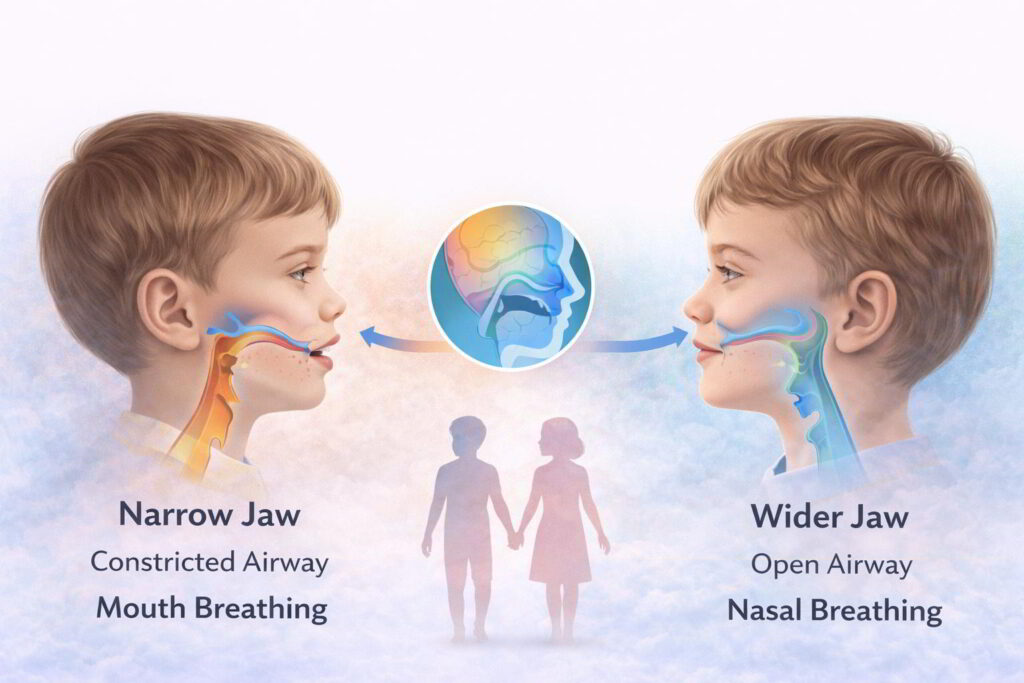
When the upper jaw (maxilla) develops properly, the palate tends to be wider, the nasal airway is more open, and teeth have more room to align naturally. This can reduce the likelihood of crowding, mouth breathing, and orthodontic issues.
When jaw growth is restricted, the palate may become narrow. This can lead to a smaller airway and contribute to breathing difficulties, snoring, and even sleep-disordered breathing in childhood or adulthood.
The connection between breastfeeding and jaw development is supported by growing awareness in airway dentistry and pediatric health.
That is why early oral development matters far beyond just baby teeth.
Facial Growth and Airway Health Connection
The face and airway develop together. A narrow palate often results in reduced nasal space, which may make nasal breathing harder. If nasal breathing is difficult, children may begin mouth breathing as a habit.
Mouth breathing is not just a preference—it can change facial growth over time. It often leads to a long, narrow facial structure, weaker jaw development, and improper tongue posture.
This is why many airway-focused dental professionals emphasize early intervention. The earlier healthy patterns are supported, the easier it is to promote natural growth.
Why Early Habits Affect Lifelong Oral Health
The first few years of life are critical for jaw and facial development. Babies learn swallowing and tongue posture patterns that may continue into childhood.
If feeding patterns are disrupted—whether due to tongue-tie, bottle-feeding mechanics, or poor latch—those patterns can influence jaw muscle function and palate growth.
Over time, these small changes may contribute to crowding, bite issues, and the need for orthodontic treatment later.
Breastfeeding supports natural oral function, which is why it is often considered beneficial for long-term development.

How Breastfeeding Supports Natural Jaw Development
Breastfeeding is more than simply delivering milk. It requires coordinated muscle function, proper tongue movement, and rhythmic sucking that stimulates healthy growth.
Unlike bottle feeding, breastfeeding requires the baby to work harder to extract milk. This effort strengthens the muscles of the jaw, cheeks, and tongue.
This natural muscle training helps shape the developing facial structure.
The Role of Sucking Mechanics
When a baby breastfeeds, the tongue moves in a wave-like motion to compress the breast and extract milk. This movement encourages proper tongue posture and promotes balanced muscle development.
The baby’s jaw also moves forward and downward in a way that supports healthy growth. This is important because the jawbone responds to functional movement. The more the jaw is used properly, the better it develops.
This is one of the main reasons breastfeeding and jaw development are closely connected.
Breastfeeding Strengthens Jaw Muscles
Breastfeeding involves more complex muscle coordination than bottle feeding. The baby must create suction and maintain a strong latch.
This strengthens key muscles responsible for jaw stability, swallowing, and facial growth. Strong jaw muscles support proper development of the lower jaw (mandible), which can reduce the risk of underdeveloped jaw structure later.
Healthy jaw development can also support better alignment of teeth as they erupt.
Encouraging Proper Tongue Posture
Tongue posture is one of the most important factors in facial development.
During breastfeeding, the tongue naturally rests against the roof of the mouth (palate). This helps widen the palate and encourages proper upper jaw growth.
Proper tongue posture also supports nasal breathing and airway development.
When tongue posture is low or restricted, the palate may not expand properly. Over time, this can lead to a narrow upper arch and crowding.
This is why breastfeeding can provide important developmental support.
Breastfeeding and Palate Development
The palate is the roof of the mouth, and it plays a major role in dental alignment and airway size.
A well-developed palate is typically wider and more rounded. This creates more space for teeth and supports nasal airflow.
Breastfeeding supports palate development because of how the tongue presses against the palate during feeding.
How Nursing Supports a Wider Palate
During breastfeeding, the baby’s tongue and jaw work together in a natural motion. This movement stimulates the palate and encourages proper expansion.
A wider palate allows more room for permanent teeth and reduces the risk of crowding.
It also supports proper nasal development because the palate forms the floor of the nasal cavity. When the palate is narrow, the nasal cavity can also become smaller.
A wider palate may support better breathing and fewer airway restrictions.
Narrow Palate and Future Orthodontic Issues
When the palate is narrow, teeth may not have enough space to erupt properly. This can lead to crowding, crooked teeth, and bite misalignment.
In many cases, children with narrow palates eventually require orthodontic expansion or braces.
A narrow palate can also contribute to mouth breathing, which may further affect facial development.
Because of these factors, many holistic dentists view breastfeeding as a natural early support for healthier palate growth.
Breastfeeding vs Bottle Feeding: Key Differences
Bottle feeding can still provide excellent nutrition and bonding. Many families rely on bottle feeding for various reasons, and it can absolutely be done in a healthy way.
However, from a developmental standpoint, the mechanics of bottle feeding are different from breastfeeding.
Bottle Feeding and Muscle Patterns
Bottle nipples are often easier for babies to extract milk from. This means babies may use different tongue and jaw patterns compared to breastfeeding.
Some bottle-fed babies may develop a more shallow sucking pattern, which may not stimulate the palate as effectively.
Bottle feeding may also require less jaw effort, resulting in less muscle strengthening.
This does not mean bottle feeding is harmful, but it highlights why breastfeeding may offer unique developmental benefits.
Pacifiers and Thumb Sucking Effects
Pacifiers and thumb sucking are common soothing behaviors. However, prolonged use can influence jaw and palate development.
Extended pacifier use can encourage the tongue to rest low in the mouth and may contribute to a narrow palate.
Thumb sucking can place pressure on developing teeth and jaw structure, sometimes causing an open bite or protrusion.
Parents in NJ often ask holistic dental providers about these habits, especially when trying to support proper facial growth.
Breastfeeding and Airway Development
Airway health is becoming a major focus in pediatric dentistry. Many dentists now understand that jaw development affects breathing, and breathing affects overall health.
Breastfeeding can support airway development by encouraging proper tongue posture and palate expansion.
Mouth Breathing Prevention
Breastfeeding promotes nasal breathing because the baby’s mouth is sealed around the breast. This supports natural nasal airflow.
Nasal breathing is important because it filters and humidifies air, supports proper oxygen delivery, and helps regulate nervous system balance.
If a baby develops mouth breathing early, it can become a long-term habit.
Mouth breathing is associated with a narrow palate, poor jaw development, and increased risk of sleep-disordered breathing.
Reducing Risk of Sleep-Disordered Breathing
Sleep-disordered breathing includes snoring, airway resistance, and obstructive sleep apnea.
Children with narrow palates and underdeveloped jaws may have smaller airways. This increases the likelihood of breathing issues during sleep.
Because breastfeeding can support palate and jaw growth, it may help reduce the risk of airway restriction later.
This is why airway-focused dentists often discuss breastfeeding and jaw development as an important preventive factor.
Signs a Baby May Have Feeding or Airway Challenges
Not all breastfeeding experiences are easy. Some babies struggle with latch, milk transfer, or feeding endurance.
These challenges may sometimes indicate oral restrictions such as tongue tie or lip tie.
Early evaluation is important because unresolved feeding problems can affect jaw development and overall health.
Tongue Tie and Lip Tie Concerns
Tongue tie occurs when the tissue under the tongue restricts movement. This can prevent the tongue from lifting properly and may lead to poor latch.
Lip tie occurs when the tissue connecting the upper lip to the gum is tight, limiting lip movement.
Both conditions can interfere with breastfeeding and affect tongue posture.
If a baby cannot use the tongue properly, the palate may not receive natural stimulation, and jaw development may be impacted.
Signs of Poor Latch or Shallow Sucking
Some common signs include:
-
clicking sounds while nursing
-
difficulty staying latched
-
excessive gassiness or reflux
-
long feeding times
-
poor weight gain
-
maternal pain during breastfeeding
If these symptoms are present, evaluation by a lactation consultant and a pediatric airway professional may be helpful.
For families searching for breastfeeding and jaw development in NJ, early support can make a big difference.
Breastfeeding and Jaw Development in NJ: Why Local Support Matters
New Jersey families have access to many excellent lactation consultants, pediatric specialists, and holistic dental professionals.
However, not every healthcare provider understands the connection between oral development and airway health. This is why families increasingly seek airway-focused and holistic dental guidance.
When parents address feeding and breathing patterns early, they may reduce the risk of future orthodontic issues and airway complications.
Early Evaluation Prevents Future Issues
Early evaluation can identify potential risk factors such as narrow palate, tongue restriction, mouth breathing, or jaw imbalance.
When identified early, gentle interventions may support natural growth.
This can reduce the likelihood of crowding, braces, or sleep-disordered breathing later.
Whole-Body Pediatric Dental Care Approach
Holistic dentistry recognizes that oral health is connected to whole-body health.
At Bloom Holistic Dental in Englishtown, NJ, we believe in supporting natural development and identifying issues early.
Our approach emphasizes prevention, education, and long-term wellness for children and families throughout Monmouth County and surrounding areas.
Final Thoughts: Breastfeeding’s Long-Term Impact on Oral Health
Breastfeeding provides far more than nutrition. It plays a powerful role in shaping the muscles, tongue posture, palate development, and jaw growth that influence oral health for life.
The connection between breastfeeding and jaw development is supported by growing awareness in airway dentistry and pediatric health. Breastfeeding encourages proper tongue posture, strengthens jaw muscles, supports wider palate growth, and may help reduce the risk of mouth breathing and airway restriction.
For families exploring breastfeeding and jaw development in NJ, understanding these benefits can provide reassurance and motivation to seek early support if challenges arise.
At Bloom Holistic Dental, we believe that early development matters. If you have concerns about your child’s breathing, oral growth, or feeding patterns, an evaluation may help guide you toward healthier long-term outcomes.
Supporting proper development today can make a lifelong difference in your child’s smile, airway, and overall wellness.
Address: 55 Willow Lane, Suite 203, Englishtown, NJ 07726
Phone: 732-792-3260
Email: bloomholisticdental@gmail.com
Hours: Mon 8–3, Tue Closed, Wed 9–4, Thu Closed, Fri 9–4; emergency by request.